The Curious Connection Between Cats And Weather
The Curious Connection Between Cats And Weather
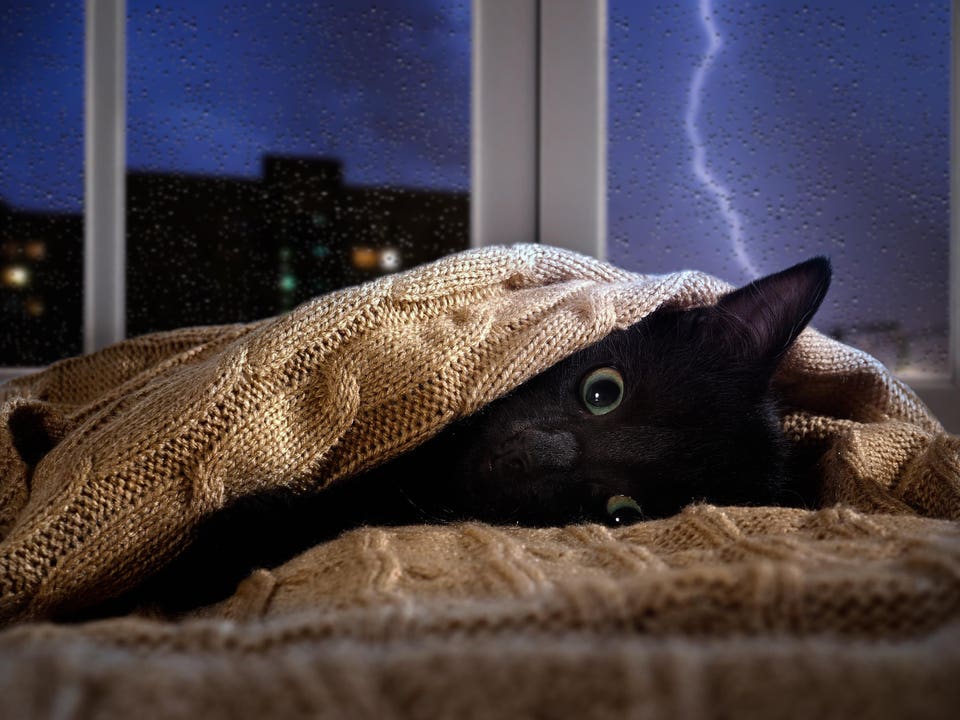
getty
Cats are popular pets. Last week my college-aged son resumed his annual campaign to get him a kitten. We finally caved. The Shepherd household is now the proud owner of a cute kitten named Nova. We adopted her from a local animal shelter in the Atlanta area. Given my fascination with weather, I thought it would be fun to explore the curious connection between cats and weather.
There are several articles and anecdotes that affirm the weather prediction or sensitivities of cats. In early European cultures, some people believed mannerisms such as clawing at carpets, washing ears, or sleeping with all paws tucked signaled weather changes. In Elinor Dewre’s 1992 Weatherwise article, she discussed other myths. One of the more popular ones posited that a cat eating grass signaled rain or storms.
NEW ORLEANS – MAY 30: Homeless kittens look up from the cage at Animal Rescue New Orleans headquarters May 30, 2007 in New Orleans, Louisiana. The grass-roots group shelters animals that were left behind following Hurricane Katrina or have been separated from their owners. According to the LA/SPCA about 104,000 pets were left behind after the storm and 88,700 pets are still unaccounted for. (Photo by Mario Tama/Getty Images)
Getty Images
As aging sets in, I increasingly resonate with older adults who complain about their joints being sensitive to atmospheric pressure changes. Our bodies have barometric capabilities. Cats do too. Many sources note that cats are cute little barometers sensitive to atmospheric pressure changes. Pressure changes are often associated with changing weather conditions. The ears of cats are sensitive to pressure changes, so abrupt weather shifts may cause cats to be restless. By the way, our ears are also sensitive to pressure changes. Have you ever noticed them “popping” during significant altitude changes?
Cats may also detect distant sounds of thunder or external disruptions like leaves rustling in windy conditions well before we do. TheArkPet.com website said, “Felines possess advanced senses of hearing and smell, which further aid in their ability to detect incoming weather changes. Cats can hear frequencies that are far beyond human capabilities.” Their keen sense of smell may also be a forecast tool. The smell of rain is called petrichor. As I wrote years ago, “Petrichor is the word that describes the scent of rain…. The basic chemistry of the process is related to decomposed organic material fused with soil, rock, and minerals in an interesting chemical brew.” Lightning also produces ozone. The olfactory membrane space in cats exceeds that of humans by several factors according to the Felidae Conservation Fund. That’s the region smell is passed along to the brain. Some sources argue that cats can smell petrichor and ozone before humans.
TOPSHOT – Lighting strikes over tornado destroyed homes on May 23, 2013 in Moore, Oklahoma. A powerful tornado classified as an EF4 passed through the town May 20, destroying homes, schools and businesses and killing 24 people including children. The epic twister, two miles (three kilometers) across, flattened block after block of homes as it struck mid-afternoon Monday, hurling cars through the air, downing power lines and setting off localized fires in a 45-minute rampage. AFP PHOTO/Joshua LOTT (Photo by Joshua LOTT / AFP) (Photo by JOSHUA LOTT/AFP via Getty Images)
AFP via Getty Images
Beyond their barometric and sensory capabilities, cats have other weather instrument functionalities. Their fur is sensitive to moisture in the air, and they also detect temperature changes. For my sixth-grade science project, I made a hygrometer, which measures humidity, using human hair. Humans are familiar with “bad hair” days caused by humidity changes. Do cats have bad “fur” days?”
Cat and weather connections are rooted in folklore, fact, and fiction. However, I am a scientist, which means robust studies and peer review matter to me. There’s not very much in the scholarly literature, however, a 2025 study, published in the journal Animals, caught my attention. Researchers examined how seasons and weather changes affected domestic cat behavior. Higher temperatures, moisture, and wind index was associated with greater time lying down, eating, and standing. These conditions also were associated with less time grooming, sitting and littering. Longer daylight hours had similar outcomes. The study entitled, “Longitudinal Study on the Effect of Season and Weather on the Behaviour of Domestic Cats (Felis catus)” also found that increase rainfall produced less grooming time and scratching.
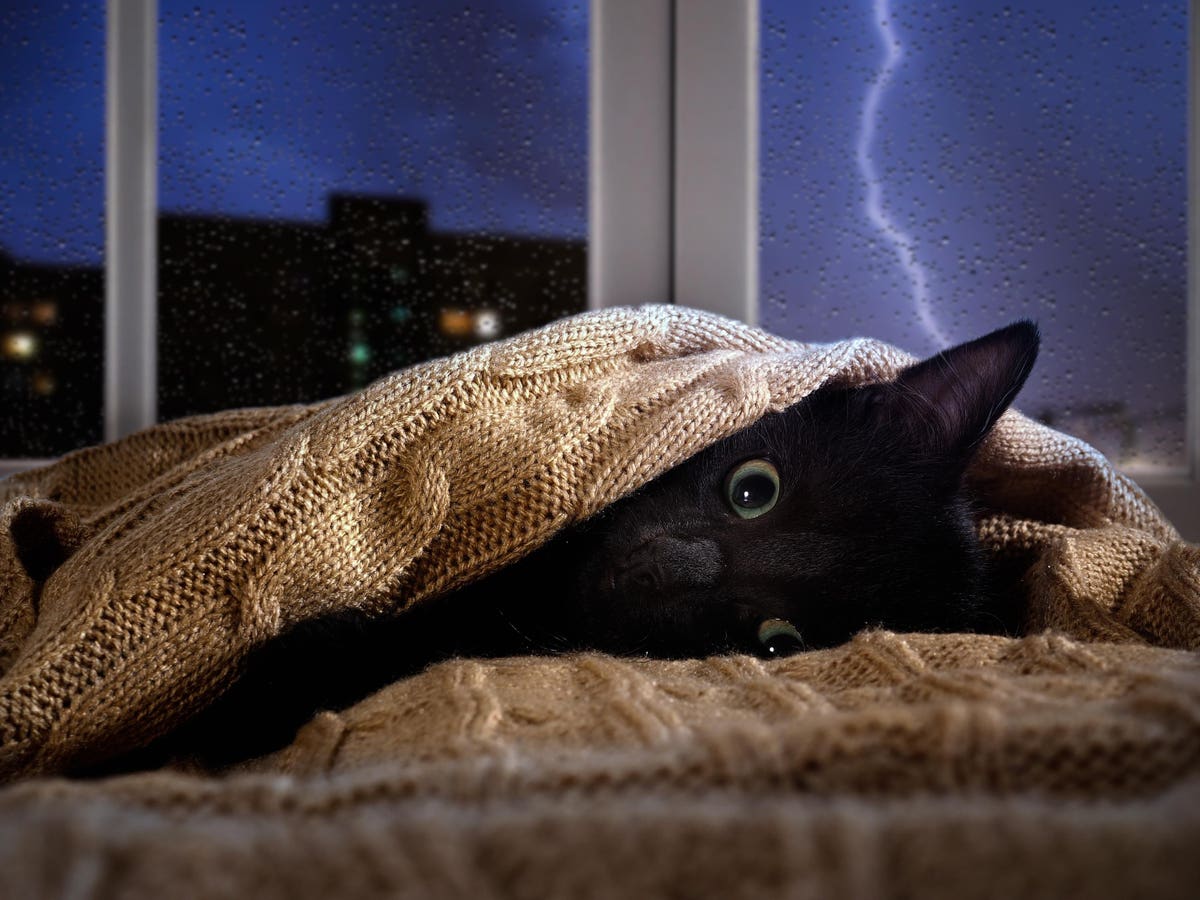
A 2022 study in Italy examined feedback from cat and dog owners. The analysis revealed for dogs and cats that play and other activity increased when the weather was cold. On the contrary, owners said hotter weather or drastic drops in temperature increased sleep tendencies. The study found no association between weather and soiling. However, cat owners reported increased nervousness or anxiety during intense rainstorms or thunderstorms.
The author’s cat was adopted during the 2025 Thanksgiving weekend.
Marshall Shepherd
2025-12-03 02:48:00